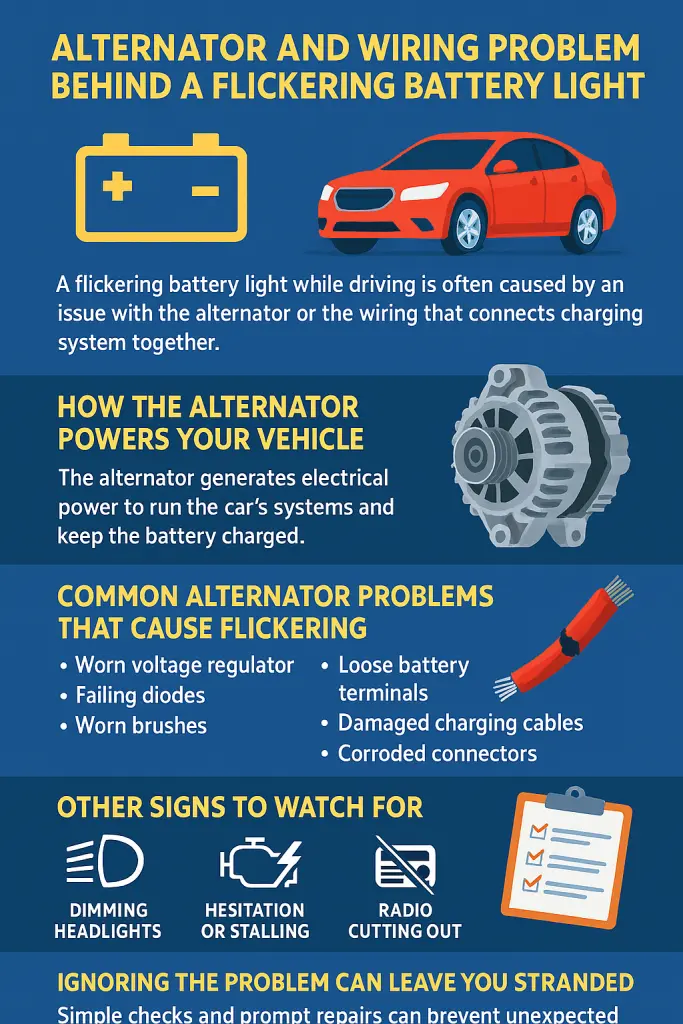
A flickering battery light while driving can feel confusing and stressful. One moment everything seems normal, and the next the warning light blinks on and off. Many drivers think this light only means a bad battery, but that is not always true. In many cases, the real problem is hiding in the alternator or the wiring that connects the charging system together.
This guide explains, in simple terms, how alternator and wiring issues cause a battery light to flicker, what signs to watch for, and why ignoring the problem can leave you stranded.
What the Battery Light Is Really Telling You
The battery light does not mean the battery itself is bad. It means the charging system is not working correctly at that moment. Your car depends on the alternator to make electricity while the engine is running. That power keeps the battery charged and runs important systems like lights, fuel injection, and electronics.
When the battery light flickers, it usually means the alternator is sometimes producing the right voltage and sometimes not. This on-and-off behavior often points to internal alternator problems or loose, damaged wiring.
You can learn more about dash warning lights from one of our sister locations.
How the Alternator Powers Your Vehicle
The alternator is driven by a belt connected to the engine. As the engine spins, the alternator creates electrical power. Inside the alternator are parts like the voltage regulator, diodes, and brushes. These parts work together to keep voltage steady, usually between 13.5 and 14.5 volts.
If any of these parts start to fail, the alternator may still work part of the time. That is when the battery light begins to flicker instead of staying on solid.
Common Alternator Problems That Cause Flickering
Worn Voltage Regulator
The voltage regulator controls how much power the alternator sends to the battery. When it starts failing, voltage can rise and fall quickly. The battery light reacts to these changes by flickering, especially when headlights, AC, or other accessories are turned on.
Failing Diodes
Diodes convert the alternator’s power into usable electricity. If one diode fails, the alternator may still charge but not evenly. This uneven output often causes the battery light to blink during acceleration or at idle.
Worn Brushes or Slip Rings
Brushes inside the alternator wear down over time. When they lose contact, charging stops for a moment and then resumes. This can cause quick flickers of the battery light, especially over bumps or during turns.
Overheating Alternator
Heat is hard on electrical parts. An alternator that overheats may work fine when cold but struggle once the engine warms up. The battery light may stay off at first, then start flickering after driving for a while. With 300+ days of sun in Denver and Wheat Ridge, our customer vehicles are often at risk of overheating.
Belt Issues That Affect the Alternator
The alternator belt plays a big role in charging. If the belt is loose, worn, or slipping, the alternator cannot spin fast enough.
A slipping belt often causes the battery light to flicker when accelerating, climbing hills, or turning on high-power accessories. You may also hear a squealing noise from the engine bay.
Wiring Problems That Trigger a Flickering Battery Light
Loose Battery Terminals
Loose or corroded battery terminals can interrupt power flow. Even a small movement can cause voltage to drop for a split second, triggering the battery light. Geographies with major temperature swings like Colorado have higher risk of loose battery terminals: basic material science indicates warm weather leads to expansion while cold weather causes contraction. This impacts your electrical system where the precision of good connections is highly important!
Damaged Charging Cables
The alternator connects to the battery through thick power cables. If these cables are cracked, frayed, or partially broken inside, charging becomes unstable. The light may flicker when driving over bumps or rough roads.
Poor Engine Ground Connections
Your car relies on ground straps to complete electrical circuits. A weak or corroded ground can cause voltage readings to change suddenly. This often leads to flickering warning lights and strange electrical behavior.
Corroded Connectors
Moisture and heat can corrode wiring connectors over time. Corrosion increases resistance, which reduces charging efficiency. This problem often causes the battery light to flicker more often during wet or humid conditions.
You can also learn more about vehicle electrical issues from one of our trusted sister shops.
When the Battery Light Flickers Only at Idle
If the battery light flickers mostly when stopped at a red light, the alternator may be weak. At idle speed, a failing alternator struggles to produce enough power. When engine speed increases, charging improves and the light goes off.
This symptom often points to internal alternator wear or a belt that is just loose enough to slip at low speeds. If internal wear is confirmed after professional alternator diagnostic testing, alternator replacement may be required to restore full charging capacity.
Flickering Battery Light While Driving at Highway Speed
A flickering battery light at higher speeds often points to wiring issues. Vibrations can move loose connections, causing momentary voltage drops. Heat can also expand wiring and connectors, making poor connections worse during long drives.
Other Symptoms That Often Appear
A flickering battery light rarely comes alone. You may notice dimming headlights, flickering interior lights, or electronics resetting. The radio may cut out briefly, or the dashboard lights may pulse.
In more serious cases, the engine may hesitate or stall if voltage drops too low. This is especially dangerous while driving.
Why Ignoring a Flickering Battery Light Is Risky
When the alternator stops charging completely, the car runs only on battery power. Once the battery drains, the engine shuts off and will not restart.
Ignoring a flickering battery light can lead to sudden breakdowns, dead batteries, and even damage to sensitive electronics. What starts as a small wiring issue can turn into a costly alternator repair if left unchecked.
Simple Checks You Can Do First
Look under the hood for obvious problems. Check the alternator belt for cracks, looseness, or glazing. Inspect battery terminals for corrosion or looseness.
If you are comfortable, gently move wiring near the battery and alternator while the engine is running. If the battery light flickers when wires move, a connection problem is likely.
How Professionals Perform Alternator Diagnostics
Technicians use a multimeter to measure charging voltage at different engine speeds. They may also perform a load test to see how the alternator handles electrical demand.
Wiring is inspected for voltage drops, corrosion, and poor grounds. Many alternator problems only appear under certain conditions, so testing while the engine is hot is important.
When Alternator Replacement Is the Best Option
Sometimes repairing wiring or replacing a belt solves the issue. In other cases, the alternator itself is worn out. Alternator replacement early on can prevent breakdowns and protect the battery from damage.
If the battery light flickers often or becomes more frequent, it is a sign the problem is getting worse, not better.
Final Thoughts
A flickering battery light is not something to ignore. It is your car’s early warning that the charging system is struggling. Alternator wear, loose belts, and wiring problems are the most common causes.
Catching these issues early can save money, prevent sudden breakdowns, and keep your vehicle reliable. When the battery light flickers, it is your car asking for attention before a small problem turns into a big one that requires immediate alternator repair or replacement.